

Introduction to Artificial Intelligence | Next Generation AI
Artificial Intelligence (AI) is a branch of Computer Science that enables machines to think, learn, and make decisions like humans. Next Generation AI systems can analyze data, recognize patterns, solve problems, and improve performance automatically.
The Next Generation AI refers to advanced AI technologies that go beyond traditional machine learning and automation. These systems are more intelligent, adaptive, human-like, and capable of performing complex tasks independently.
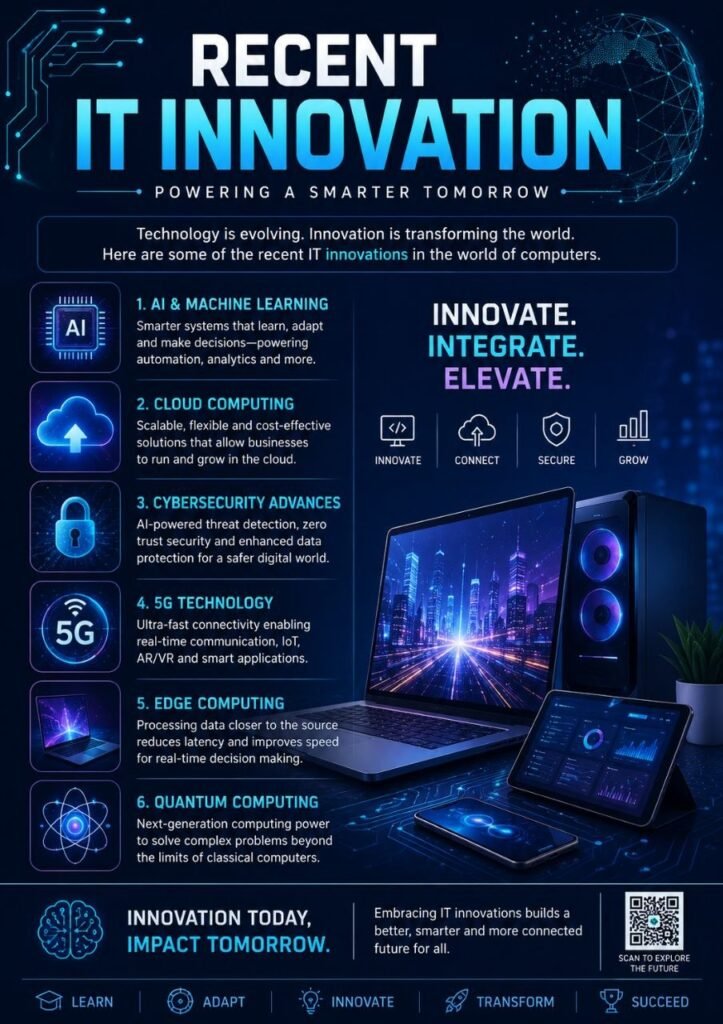
Definition of Next Generation AI
Next Generation AI is the future form of artificial intelligence that combines:
- Machine Learning
- Deep Learning
- Natural Language Processing
- Robotics
- Quantum Computing
- Generative AI
- Autonomous Systems
to create smarter and more human-like machines.
Evolution of AI
1. First Generation AI
- Rule-based systems
- Fixed programming
- Limited intelligence
- Example: Calculators, early chatbots
2. Second Generation AI
- Machine Learning-based systems
- Learns from data
- Better prediction and automation
- Example: Recommendation systems
3. Next Generation AI
- Self-learning and adaptive
- Human-like reasoning
- Emotional understanding
- Creative content generation
- Autonomous decision-making
Main Features of Next Generation AI
1. Self-Learning Ability
AI can learn automatically from new data without human programming.
Example
- Self-driving cars improve driving behavior through experience.
2. Generative Capabilities
AI can create:
- Images
- Videos
- Music
- Articles
- Computer code
Example
OpenAI developed advanced generative AI systems like ChatGPT.
3. Natural Language Understanding
AI can understand and communicate in human languages naturally.
Applications
- Virtual assistants
- AI teachers
- AI customer support
4. Computer Vision
AI systems can recognize:
- Faces
- Objects
- Handwriting
- Medical images
Example
AI-powered disease detection systems in hospitals.
5. Emotional Intelligence
Future AI can detect emotions through:
- Voice
- Facial expressions
- Behavior analysis
6. Autonomous Decision Making
AI systems can take independent decisions in real-time situations.
Example
- Smart drones
- Autonomous robots
- Driverless vehicles
Technologies Used in Next Generation AI
Machine Learning (ML)
Machine Learning allows computers to learn from data.
Types of ML
- Supervised Learning
- Unsupervised Learning
- Reinforcement Learning
Deep Learning
Deep Learning uses artificial neural networks similar to the human brain.
Applications
- Speech recognition
- Image recognition
- Language translation
Natural Language Processing (NLP)
NLP helps AI understand human language.
Examples
- Chatbots
- Voice assistants
- Language translation apps
Robotics
Robotics combines AI with machines to perform physical tasks.
Examples
- Industrial robots
- Medical robots
- Military robots
Quantum AI
Quantum computing increases AI processing speed dramatically.
Benefits
- Faster calculations
- Better simulations
- Advanced problem solving
Applications of Next Generation AI
1. Education
AI-powered education systems provide:
- Personalized learning
- Smart tutoring
- Automated grading
Example
AI-based online learning platforms.
2. Healthcare
AI helps doctors in:
- Disease prediction
- Medical diagnosis
- Drug discovery
- Robotic surgery
Example
AI detecting cancer from medical scans.
3. Agriculture
AI improves farming through:
- Smart irrigation
- Crop monitoring
- Weather prediction
- Pest detection
4. Banking and Finance
AI is used for:
- Fraud detection
- Risk analysis
- Automated trading
- Digital banking assistants
5. Transportation
AI Applications
- Self-driving cars
- Traffic management
- Smart navigation systems
Example
Tesla uses advanced AI in autonomous driving systems.
6. Defense and Security
AI helps in:
- Cybersecurity
- Smart surveillance
- Autonomous weapons
- Threat detection
7. Entertainment
AI generates:
- Movies
- Music
- Game environments
- Personalized recommendations
Advantages of Next Generation AI
1. Increased Efficiency
AI performs tasks faster and more accurately.
2. Automation
Reduces human workload.
3. Better Decision Making
AI analyzes huge amounts of data quickly.
4. 24/7 Availability
AI systems work continuously without rest.
5. Innovation
Creates new opportunities in science and technology.
Disadvantages of Next Generation AI
1. Job Displacement
Automation may reduce human employment in some sectors.
2. Privacy Risks
AI systems collect large amounts of personal data.
3. Security Threats
AI can be used for cyber attacks and misinformation.
4. Ethical Concerns
Questions about:
- Bias
- Fairness
- Human control
5. High Development Cost
Advanced AI systems require huge investments.
Ethical Issues in Next Generation AI
AI Bias
AI may produce unfair results if training data is biased.
Data Privacy
Protection of user data is essential.
Human Dependency
Overdependence on AI may reduce human skills.
AI Regulation
Governments need laws to control misuse of AI.
Future of Next Generation AI
The future of AI is expected to include:
- Human-level conversational AI
- Fully autonomous transportation
- AI scientists and researchers
- Smart cities
- AI-powered healthcare systems
- Brain-computer interfaces
- Humanoid robots
Important AI Concepts
Artificial Neural Network
A computing system inspired by the human brain.
Generative AI
AI that creates new content such as text, images, or music.
Artificial General Intelligence (AGI)
A future AI capable of performing any intellectual task like humans.
Super AI
Hypothetical AI smarter than humans.
Difference Between Traditional AI and Next Generation AI
| Traditional AI | Next Generation AI |
|---|---|
| Rule-based | Self-learning |
| Limited tasks | Multi-purpose |
| Fixed programming | Adaptive intelligence |
| Less creativity | Can generate content |
| Requires human control | More autonomous |
Real-World Examples of Next Generation AI
- ChatGPT
- Google Gemini
- GitHub Copilot
- Tesla Model S autonomous systems
- AI medical diagnostic tools
- Smart home assistants
Conclusion
Next Generation AI is transforming the world rapidly. It is making machines smarter, more creative, and capable of performing human-like tasks. AI has huge potential in education, healthcare, business, transportation, and research. However, ethical use, privacy protection, and proper regulation are necessary to ensure AI benefits humanity safely and responsibly.
Short Revision Points
- AI = Machine intelligence
- Next Generation AI = Advanced self-learning AI
- Key technologies:
- ML
- Deep Learning
- NLP
- Robotics
- Quantum AI
- Major applications:
- Healthcare
- Education
- Banking
- Transportation
- Advantages:
- Speed
- Accuracy
- Automation
- Challenges:
- Privacy
- Job loss
- Ethical concerns
